Category Archives: Ideas

Out of context

The difference between innocence and guilt is a matter of urgency. How much time is there to judge?

In crises – on the battlefield, in a catastrophe, or even under the pressure of a tight deadline – judgment is dispensed quickly and cursorily. (“Analysis paralysis! We don’t have time to philosophize!”) In peace judgment is slower and deeper.

*

Three men were condemned in court, each for a statement he had made which had been taken out of context and used as evidence against him.

The first man would have been absolved by the sentence preceding and the sentence following his statement. The second man would have been released had the full transcript of his speech been made available with a brief explanation of his situation. The third man also would have been exonerated had the courts heard and understood his full speech, knew his biography and had learned to see his situation as he saw it – but this would have taken months or years of close and honest study. In other words, the third man really was guilty.

*

Some people prefer urgency precisely because urgency leaves no time to think. One must leap straight to the conclusion, ostensibly in order to “act decisively”. In some cases, though, the need for immediate action is a semi-conscious ruse. The possibility that the situation could be different from how it appears at first glance arouses instinctive anxiety in the “man of action”. This anxiety is discharged in attacking dissent and lunging into reaction. From there doubts are dispelled by the distractions of events.

However, urgency is real, the need to act is real, and guilt is real. The question is: Real in what sense? This kind of question deservedly arouses the most cynical skepticism. “God is real… but in what sense?” “What is… is?”

*

The declining world-view loves an emergency; but the dying world-view is dependent on emergencies and expends its last strength creating them.

Some wars are only the death-spasms of a world-view.
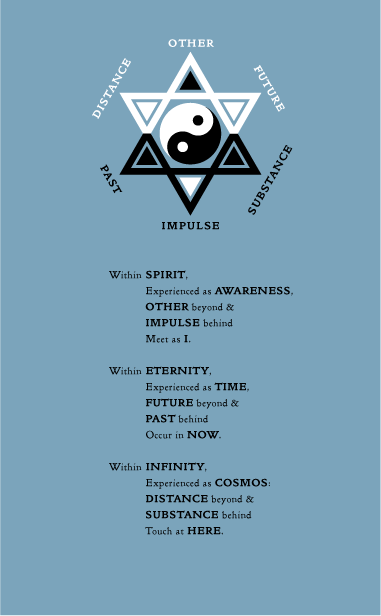
Beyond collective narcissism

The Democrats in nominating Obama transcended the familiar and put its faith in the radical Other.

“Radical Other”: This means Obama is unknowable on principle to the average Democrat. He is fascinating precisely because (for most for now ) it is qualitatively impossible to imagine how the world looks from his eyes. It is obvious from his words and bearing that his vision is a good vision. Obama’s infamous vagueness seems to me to be refusal to pre-determine the outcome of a conversation that has not yet taken place; his hope is faith that the fusion of horizons arising from dialogue between antithetical perspectives can result in a deeper, more comprehensive, more inclusive, more nourishing national vision.

If the Democrats had nominated Hillary it would have continued an old narcissistic pattern that sunk the party again and again. “Give me the epitome of what I can comprehend: myself. That is, give me a competent administrator.” Skillful administrators are necessary and good, but even the most excellent administrators tend to ground themselves in a vision. The national vision is precisely what has been in question. With the nomination of Obama this pattern was broken: the Democrats finally adored beyond themselves and elected a true leader.

Meanwhile look what happened in the lower-order right, the Republican mob. Since Neoconservatism – (a movement with Troskyist roots, which “turned conservative” only in the 60s as a reaction against Stalinism) – gained full control of the party the Republicans have been hard at work employing the demagogic tricks of the left, namely disingenuously condescending to and flattering the masses, pretending to be “of the people”. The Cheney upper-Right Republicans taught the lower-Right to adore only its own self-image and to hate everything that does not conform to it. Essentially, they’ve taught those with the most crippled judgment to exalt its own style of “no-brainer”, self-evident, common sense, and to reject as the “wise man’s foolishness” whatever can’t be processed and packaged into a sound-bite…

Particity

Particity: participatory being in relation to a whole who transcends it.

This statement, I think, refers to particity: “In true love it is the soul that envelops the body.”

I am interested in recognizing evidence of the particity that saturates the being of a self, and the interpretive tricks used to explain it away or cover it over in order to preserve our individualistic conceits. Imagine each of us as participants in a conscious being trying to come to terms with itself through our ordinary (no unusual or supernatural conceptions added) human interactions. Why not? A mind can be of two minds on a matter and remain a mind.

*

I understand Logos to be the being that arises from beings participating in dialogue who through their participation become a unity that exceeds each but includes both.

*

A series of statements from Heraclitus, who lived 500 years before the birth of Jesus Christ:

Although this Logos is eternally valid, yet men are unable to understand it — not only before hearing it, but even after they have heard it for the first time. That is to say, although all things come to pass in accordance with this Logos, men seem to be quite without any experience of it — at least if they are judged in the light of such words and deeds as I am here setting forth.

My own method is to distinguish each thing according to its nature, and to specify how it behaves; other men, on the contrary, are as neglectful of what they do when awake as they are when asleep.

We should let ourselves be guided by what is common to all. Yet, although the Logos is common to all, most men live as if each of them had a private intelligence of his own.

Although intimately connected with the Logos, men keep setting themselves against it.

Listening not to me but to the Logos, it is wise to acknowledge that all things are one.


*

Now read this as if you’ve never heard it before:

In the beginning was Logos, and Logos was with God, and the Logos was God.  He was in the beginning with God. All things were made through Him, and without Him nothing was made that was made. In Him was life, and the life was the light of men. And the light shines in the darkness, and the darkness comprehended it not.

…For where two or three are gathered in my name, there am I in the midst of them.

 *


Adaptation

I think it is likely that the middle act of Adaptation is just as distorted by Charlie’s psychological fantasies as the last act is by Donald’s. I need to watch it again with that in mind, looking for a psychological seam between the first act and the second.

I love Charlie Kaufman.

They are dreadful people

“Allow me to tell you one little anecdote, gentlemen,” Miusov said impressively, with a peculiarly majestic air. “Some years ago, soon after the coup d’etat of December, I happened to be calling in Paris on an extremely influential personage in the Government, and I met a very interesting man in his house. This individual was not precisely a detective but was a sort of superintendent of a whole regiment of political detectives – a rather powerful position in its own way. I was prompted by curiosity to seize the opportunity of conversation with him. And as he had not come as a visitor but as a subordinate official bringing a special report, and as he saw the reception given me by his chief, he deigned to speak with some openness, to a certain extent only, of course. He was rather courteous than open, as Frenchmen know how to be courteous, especially to a foreigner. But I thoroughly understood him. The subject was the socialist revolutionaries who were at that time persecuted. I will quote only one most curious remark dropped by this person. ‘We are not particularly afraid,’ said he, ‘of all these socialists, anarchists, infidels, and revolutionists; we keep watch on them and know all their goings on. But there are a few peculiar men among them who believe in God and are Christians, but at the same time are socialists. These are the people we are most afraid of. They are dreadful people. The socialist who is a Christian is more to be dreaded than a socialist who is an atheist.’ The words struck me at the time, and now they have suddenly come back to me here, gentlemen.”

— Dostoevsky, The Brothers Karamazov

The first musician

I keep posting a story then pulling it down again. It is an ugly story, but it is not merely ugly. Things are beautiful from where I stand, but if you don’t stick with me long enough to see as I see, my outlook appears horrifying. Really, my perspective is necessarily horrifying. The entire point of my outlook is to include precisely what is universally excluded in the name of goodness, beauty, taste, optimism, etc.

After years of my kind of experimental seeing-and-digesting, it has gotten to the point that “sticking with me” is far too much to ask of anyone, even of a friend. Nevertheless, I ask anyway. It is painful to have to ask for such a thing, much less to be told “no” and to be reminded of the legal limits of “friendship”, or to be told “yes” and to be indulged or tolerated.

I’ve developed all sorts of sneaky ways of communicating with the unwilling. (I have to do my job.) It’s like feeding a baby.

*

If you cherish independence and individuality, at least follow me this far:

1) Do not fully exercise your independence and individuality or you will lose them. Genuine, radical, faithful, active individuality self-destructs. Instead be moderate and stop a little short. Think your thoughts against “the herd” to your heart’s content – but think them in the accepted manner of the herd. Especially protect yourself from the influence of any other individual. Remain comfortably “unique”. Once you cross over into genuine individuality you might find yourself unable to cross back over into the world of individualism. Even if you do get back, you’ll starve for authentic company. People will be around you, but they will not be with you.

2) If you know how to read, be careful who you read.

3) People do not love what they would love to believe they love. Some people are much easier to love as memories. A memory does not resist fictionalization.

A kind of heartbreak

I’d love to meet someone who knows my kind of heartbreak:

A reality is shared between you and an Other; but then the other changes and the reality is no longer shared.

The Other comes to you with a radically different reality and retroactively disinterprets the reality you once shared in a new, alien and alienating light. Faith is entirely a matter of practicing truth; what is practiced now is apartness, estrangement. What was shared cannot even be recalled. The relationship is annulled – annihilated not only in the present and future but also in the past.

In my experience, this estrangement is felt generally before it can even be traced back to the particular Other who has effected the estrangement. The entire world darkens, the nerves lose their protecting skin. Something is wrong. (I believe this sense of general wrongness was how Jesus knew he had been betrayed by one of his disciples.)

Innately good

I was raised with the idea that people are “innately good”. Good? Meaning that we are innately incapable of cruelty? That we are innately not in need of development of goodness? Or that we are born good but learn evil from “society”? Those were the various meanings I heard in the claim of innate goodness, and they all struck me as self-evidently false, even dishonest.

However when I see good as the ability to acknowledge, to be invested in, to identify oneself as belonging to super-egoic existences – relationships with other individuals and formal and informal cultural institutions that surround us and are the substance of self – I do see people as innately good. We have the innate desire to belong to and to participate in and to love all of what is beyond self, but supports and surrounds self.

*

“The chastest expression I have ever heard: ‘Dans le veritable amour c’est l’ame, qui enveloppe le corps.’ (‘In true love it is the soul that envelops the body’)” — Nietzsche

*

From puritanism to radical capitalism: Humans are innately sinful –> Humans are innately self-interested –> Humans are exclusively self-interested –> Humans should be expected to behave exclusively out of self-interest –> In “the world” I should be expected to behave exclusively out of self-interest. The radical capitalism of the United States is the combination of modalism of moralities (contextual moral relativism) and puritanical moral pessimism. In the world of business a puritan permits his “innately sinful” nature to run amok and wholeheartedly “render unto Caesar what is Caesar’s”.

*

Genuine transcendent relationship depends on honesty. This includes the sub-self beings of which compose us. They have to be taught to speak truthfully to one another, and to be patient in speaking and listening. This practice is philosophy.

Originality

A search for novelty that terminates in an already well-established truth is the best outcome. Genuine, radical novelty isolates; it makes one alien and insulting; it is unbearably lonely. An original new way to see or say something familiar invests the familiar with new energy and depth, and is welcome in the world. Not that we should abandon the search for the new – but we ought to accept the gift of reinvention when it comes to us.

*

Longing is the core of mystery
Longing itself brings the cure
The only rule is suffer the pain.

Your desire must be disciplined,
And what you want to happen
In time, sacrificed.

– Rumi

 *

“The advantage of a bad memory is that, one can enjoy the same good things for the first time several times.” – Nietzsche

Beyond objectivism and solipsism

It is easy to enter the realm of idealism through the gate of solipsism. But once you pass through that gate, who is there to follow out? Whose testimony has validity? You cannot leave this realm with your self; and if you will not leave your self, you will remain behind as a sovereign self-reflection.

Conceptions of power

When people feel “powerful” they can mean quite a few things. Some of them are not even actual powers with practical potential, but ephemeral sensations of powerfulness. Genuine power is demonstrated in application: what can it do? Here is a partial typology of powers, both imagined and real:

1) Power to inflict pain – sadistic power – the capacity to steal energy directly from another.

2) Power to coerce – tyrannical power – the capacity to render another will strictly instrumental to one’s own.

3) Power to evade other powers – freedom – the capacity to at least feel that one’s own will is independent and unrestricted by other wills in all relevant categories of action.

4) Power to understand – philosophy – the capacity to at least feel that through one’s intellectual efforts one is brought to an experiences of self-sovereignty.

5) Power to persuade – charisma – the capacity to harmonize other wills with one’s own will (to form consensus).

6) Power to organize desires into unities – leadership – the capacity to synthesize individual wills within one’s own overarching will (to align disparate interests).

7) Power to transcend – The capacity to identify one’s will with a will that includes and exceeds it, and to participate knowingly as a participant in what defies objective knowledge.

Myth

It may be stupid, but at least it is decently stupid to misunderstand and reject myth. What is indecently stupid is to misunderstand and accept myth.

This indecent stupidity comes in two strains, one phobic and the other counter-phobic: 1) fundamentalism, and 2) psychologization of myth, a la Joseph Campbell.

The commonality of the two strains is also two-fold. They share: 1) a stunted intellectuality dominated by a narrow conception of knowledge as explanation; and 2) a preoccupation with religion experienced primarily as a form of libidinous power, fascinating because it defies explanation. The fundamentalist wants to harness that power (which is alarming) and the psychological mythicist wants to disarm and diffuse it (which is boring). And of course, there are also those disordered souls who have both attitudes toward myth simultaneously, and spasmodically push and pull against it according to their current orientation (which is embarrassing). This type is common in the New Age community.

These three types all have “spiritual” self-identities, but are the furthest thing from spiritual. They lack depth, and they lack the will to know what depth is.

*

People who want life explained to them should study science. People who find God incomprehensible ought to be (cautious) atheists.